
← Previous in this series: Philippians 1:3–11: A Prayer for Love, Knowledge, and Discernment
Paul is writing a personal letter to a church he cares deeply about. The church is having some issues, as we will see later, but Paul takes the time to lay out ideas he will use to address them. In the very structure of this letter, he has laid out unity, service, and humility. He has pointed to the leveling blessing of Jesus’ grace. His grace is unifying; no matter your position and title, we are all children of God, and we are all saints, called-out people.
Today, we come to the body of the letter.
The Elliots in Ecuador
I wonder if you have ever heard of Jim and Elisabeth Elliot. The most recent piece of media about them was a 2005 movie, End of the Spear.
In the early 1950s, Jim Elliot and his wife, Elisabeth, served as missionaries in eastern Ecuador, working primarily with the Quichua people in language, translation, and church planting. Jim became increasingly burdened for the Waodani (called “Auca” at the time), an isolated tribe with a reputation for killing outsiders.
In late 1955, Jim joined four other missionaries in Operation Auca. For months, they flew over Waodani settlements, lowering gifts from Saint’s plane and exchanging items in what appeared to be friendly contact. On January 3, 1956, they landed on a sandbar in the river. Five days later, on January 8, a group of Waodani warriors speared all five men to death.
In the years that followed, Elisabeth Elliot, with her young daughter Valerie, went to live among the Waodani. Many in the tribe, including some of the killers, eventually converted to Christianity. Elisabeth chronicled the story in Through Gates of Splendor and Shadow of the Almighty, and it became one of the most influential missionary narratives of the twentieth century.
There is just something so challenging about this when you put yourself in their shoes. What a terrible thing to happen, but what amazing glory was produced.
I am sure you have heard of other stories like this over the years. A bad thing, a bad situation, somehow advancing the gospel. You may even have examples of that in your own life.
Well, that is what we are talking about today. Let’s read.
The Text: Philippians 1:12–18
I want you to know, brothers, that what has happened to me has really served to advance the gospel, so that it has become known throughout the whole imperial guard and to all the rest that my imprisonment is for Christ. And most of the brothers, having become confident in the Lord by my imprisonment, are much more bold to speak the word without fear.
Some indeed preach Christ from envy and rivalry, but others from good will. The latter do it out of love, knowing that I am put here for the defense of the gospel. The former proclaim Christ out of selfish ambition, not sincerely but thinking to afflict me in my imprisonment. What then? Only that in every way, whether in pretense or in truth, Christ is proclaimed, and in that I rejoice.
Fettered Liberty
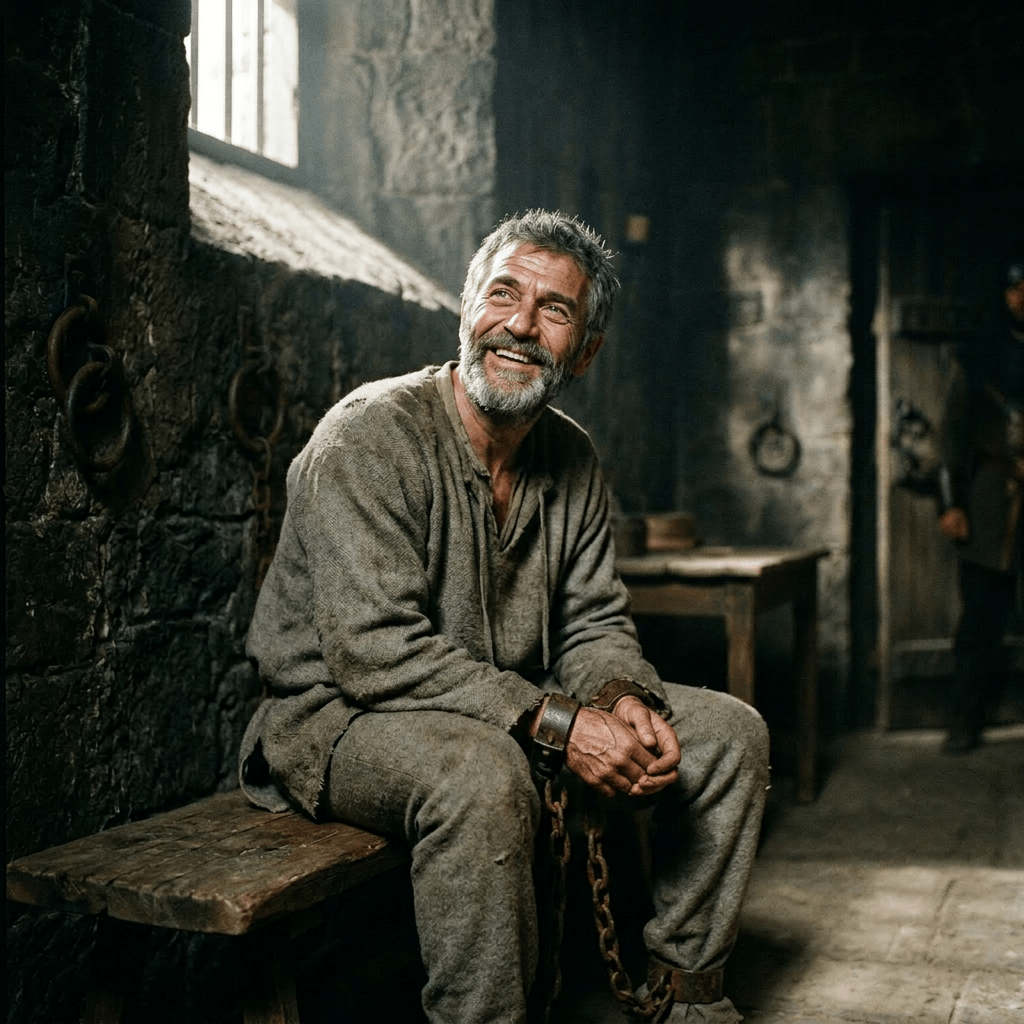
I am not one to title a sermon, but as I read and prepared, a phrase resonated with me: Fettered Liberty. If not a title, it is an expression of meaning for these verses. Fettered means one has been bound. You are stuck and imprisoned. You are not in control. Yet liberty implies freedom. It implies autonomy and self-government. In this scripture, Paul’s chains only work on the physical level, and the liberty of the gospel message is freely at work.
Paul is in prison. The church, with care and concern, had sent Epaphroditus with a gift to alleviate some of the stress of this imprisonment that they were sure Paul must be experiencing. Prison being a miserable experience, even more so 2,000 years ago, the sympathy and empathy must have been a strong motivating factor to try to help Paul.
This deep, mutual love and care between Paul and this church is encouraging. We saw Paul describe it last week, and now Paul tells a little of the Philippian church’s part of it.
Paul is fettered. We saw at the end of Acts that Paul was not wasting time in prison. He was influencing people, writing letters, and having people visit him. Yet he had grander plans than to be stuck in one place, chained to a guard, unable to travel about. In fact, the last three years, in the book of Acts, had been one long period of imprisonment and under the care of others. He had no freedom, and yet, God had brought him to where he needed to be. He was fettered, but somehow still in Rome, where he had desired to go for some years.
God is faithful.
It was this fettered condition that concerned the Philippian church. It was what was worrying them. It was what had inspired them to act. And with rapt attention, they awaited the return of Epaphroditus to learn of the trouble and pain that Paul was suffering. Yet when the letter is read, they do not find what one would logically expect.
They do not receive news of his loneliness. His abuse or his physical pains. There is no complaint about hunger or sickness that can characterize ancient imprisonment. No, Paul ignores that and opens the body of this letter with news of the gospel condition.
He tells them, “I know this is surprising, but the gospel is advancing!”
The gospel is moving freely. I am fettered, but the gospel is at liberty to move. In fact, the fettering is pushing the gospel forward.
Put yourself in the sandals of the Philippians reading this for the first or the thirty-first time. You expect a normal human response from Paul, but instead, they are given a new perspective.
“Yes, I am imprisoned, but the people I am with, people in the royal palace, are starting to note the reason for my imprisonment has something to do with Jesus.” Astounding!
“Yes, I am imprisoned, but as the local church walks through this with me and they see how I am behaving and holding myself, they are emboldened to speak about the gospel with even more urgency.”
I think fettered liberty is appropriate for this little collection of verses. I can attest to this spiritual and theological reality that Paul is drawing out in my own life. Maybe not in the exact same way, but so many times in my worst moments, God has done things to draw people to him and highlight the good news of the gospel in the midst of the problem.
A Pattern Throughout Scripture
I do not think we should be surprised by Paul’s attitude. We have seen this at work in his life through the book of Acts. Beyond Paul, there are hints of this type of faith all throughout scripture.
It was through barrenness that God chose to draw out his chosen people from Abraham and Sarah. It was out of infanticide that Moses was literally drawn out to lead God’s people. It was through two old men, Joshua and Caleb, well past their primes, that God walked his people into their promised land. It was from the youngest and overlooked that God chose a new king for his people in David. It was in the midst of calamity and trials that some of the most famous and astounding miracles of God were performed, and we see this powerfully highlighted in the lives of Elijah and Elisha. It was from a lineage of failures, prostitutes, and a few foreigners that Jesus came forth in the New Testament.
And finally, it was through the pain and suffering of crucifixion that the goodness of the gospel was launched. From evil, God produced everlasting blessings. And here, Paul, in alignment with a suffering Savior, announces this horrible situation actually, surprisingly, unexpectedly has produced some good fruit.
The enemy rejoices in our failures and our pain, but he has not learned that God is still God and God is still good even in the pain.
Paul says, in fact, even the people who are around me who wish to mock me or use my imprisonment for their own gain are proclaiming the gospel. Paul has no choice but to rejoice—which we will talk about in great detail next week.
Paul is fettered, but the gospel is free. The world has produced evil, but the Lord has moved anyway.
A Different Perspective
I might be suffering, but what is God doing? I might be struggling with this relationship, but what can God do? I might be in a painful situation, but the gospel is moving through the pain to reach others.
I might not have all the resources I want, I might be living in lack, but the gospel is being proclaimed in my life.
What a different perspective, and we need it.
We get distracted by good things. God can use material blessings. He has given and used the blessings of the North American church to do wonderful things, and I pray that it continues. Yet often we limit God and ourselves by those material blessings.
If only we had a better building. If only we could afford this or that. If only we could pay some staff members. If only we had more money to give. Good things, by the way, but not the only things. These verses show us the full picture of God’s sovereignty, faithfulness, and power. Even when things are going wrong, God is making things right. Even when everything is falling apart, God is producing gospel results.
And on a personal level, we need to hear this. We fixate on our problem. We get so distracted by what we do not have. We get trapped into thinking that our problems are a sign that God does not really care, but the reality is that out of lack and out of pain, God is still working in your life.
Again, the gospel story was born from pain and suffering, so why are we surprised that even the bleakest moments can be fruitful?
I want that reality woven into my life so I can see it in action and so others can see it in action.
Quiet, Steady Boldness
Paul’s example for the Roman church and the Philippians encourages boldness. So should our attitudes and boldness encourage others and our children.
I want my kid to see me deal with life in a way that prioritizes confidence in the power of the gospel proclaimed. I want them to see my life defined by the success of the gospel in every situation. I am not saying I ignore pain or bury my head in the sand to the problems around me, but when I pull back and look at my situation, what really matters is that, in both blessings and problems, the gospel is being pushed forward. I want to be defined by that.
2,000 years later, I read this, and I am inspired to be bolder. I don’t know if you know this, but boldness gets results. It doesn’t have to be loud boldness either. Jim and Elisabeth Elliot obviously display a bit of loud, bold boldness for the gospel, but our boldness might not be that loud.
What do I mean by that? I mean, you don’t have to yell at someone about Jesus (though sometimes maybe you do), but sometimes a single word of faith in a storm is enough to draw attention to the gospel.
Looking back at the Elliot family, as I said, it’s both encouraging and challenging. There’s a clear level of passion, boldness, encouragement, and sacrifice here that I think we may never experience. Our lives may never be in danger in advancing the gospel. It might be a little social pressure and social discomfort, but we may never be facing down spears.
But I don’t think we have to face down spears to do justice to the mission God has given each and every one of us. Depending on the context, sometimes the challenge is not just to die and suffer for the gospel as a martyr, but to live for the gospel every day, in the small moments. The hidden movements.
This does require some boldness and some suffering to put away sinful desires, but what I’m talking about is a consistency in following Jesus. What I’m talking about is actual discipleship. Actually doing things that strengthen your relationship with God. You’re not just calling yourself a Christian; you are being a Christian through your prayer life, your relationships, and your church.
It’s a quiet and steady boldness that seems like it might not produce the same results as, say, the Elliot family’s testimony, but it’s still powerful, still encouraging, and it still might move others to be bold for Christ when they look at your example and how you do life the right way with God.
I want to join Christ’s suffering as a privilege. That was what Paul was doing, and it’s something we can do every day when we submit ourselves to Him.

 Zachary Peters
Leave a comment